How Living Smaller Gave Me More Financial Freedom
Originally published 21 August 2024 · Updated 20 October 2026
The day I officially became free was December 1st, 2018. It’s a day I will always celebrate. At 10:45 that morning, the sale of my business closed. It was the last part of the plan to end a chapter that had taken up more than thirty years of my life.
Closing that door for the last time was symbolic to me. When I heard it close, I knew I was finished with that part of my life. I was tired. I was done. I wanted freedom and choices.
I did have money from selling assets, but it wasn’t enough to keep living the way I had been living indefinitely. I still planned to earn an income. This time, I wanted to do it on my terms.
I had to ask what I actually needed
For starters, I had to change my outlook on life. I couldn’t keep buying the latest and greatest just to have bragging rights and say, look at what I have.
When I looked at what it would cost to keep living that way, the numbers weren’t comfortable. I could keep chasing more money, or I could stop needing so much of it.
I chose the second option.
I sold assets, paid down debt, and bought a smaller home with cash. I had money from the sale of my business to help make that possible. That’s an important part of the story. I wasn’t starting with an empty bank account.
Removing the mortgage made a substantial difference. So did having less space to maintain and fewer reasons to buy more things to fill it.
What living smaller cost me at the time
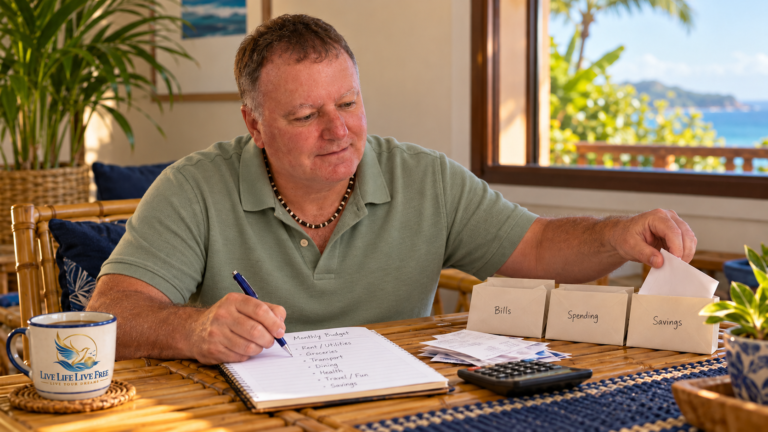
In 2020, my monthly spending for myself was about C$1,525, with no mortgage or other debt. These amounts are in Canadian dollars.
| Monthly expense in 2020 | Amount in CAD |
|---|---|
| Condo fees and insurance | C$475 |
| Utilities, including internet | C$300 |
| Vehicle costs | C$275 |
| Groceries | C$400 |
| Other spending | About C$75 |
| Total | About C$1,525 |
That was my budget then. It isn’t a price guide for living today. I also had money set aside for surprises, and an agreement from the business sale covered my medical premiums. Without those arrangements, the picture would have looked different.
Still, seeing the monthly total brought the change home to me. I no longer needed the same level of income just to keep everything going.
I didn’t get every income idea right
At first, I set up three dropshipping stores, each with a different theme. They were doing okay, and then the pandemic shut down my suppliers. I tried to sell the websites, but I ended up shutting them down.
I also discovered that dropshipping was a lot of work. I definitely wouldn’t call it passive income. So much for the simple and foolproof plan I thought I had after watching the gurus on YouTube.
After closing those stores, I had more time to concentrate on content creation and repurposing. I liked figuring out how an article could be developed for a blog, a book, or a video. It took work to learn and get organised, but this was work I enjoyed doing.
An annuity was also part of my income arrangements. It was funded with money I already had. If you’re considering one, understand the particular contract, fees, and risks; Investor.gov has an introduction to how annuities work.
I had several pieces supporting the change. A new side project wasn’t paying for everything on its own.
The small spending habits mattered as well
I started questioning the things I had stopped noticing. How often was I eating out? Did I need another device? Why was I paying for services I barely used?
I didn’t want to spend the rest of my life telling myself I couldn’t buy a coffee. I wanted to stop spending automatically and then wondering where the money had gone.
There was room for enjoyment. I just had to choose what I enjoyed enough to pay for.
Would a smaller life work for you?
Start with your own bills. Include annual costs, repairs, healthcare, and the things that don’t turn up every month. Then look at what a change would really cost, including moving expenses and fees.
A smaller property isn’t automatically cheaper once everything is included. It also needs to suit your day-to-day life. Being far from people you rely on can be an expensive saving in other ways.
If you can, try spending less while you still have your existing income. You’ll learn where it feels easy and where the plan needs adjusting. The CFPB’s budgeting tools offer worksheets you can adapt to your own country and circumstances.
For me, living smaller meant fewer bills demanding that I keep working at the same pace. I could try something new without needing it to pay every expense straight away.
Living smaller took a little time to get used to. Once I adjusted, I could see how much of my old life had been spent paying for things and keeping everything going. I didn’t miss that part at all.
I still worked, but my expenses no longer required the same income. That was what gave me more choices, and choices were what I had wanted in the first place.
Read how I got my spending under control or what made early semi-retirement possible for me.