
How to Stop Overspending: The Simple System That Helped Me
Originally published 26 August 2024 · Updated 20 October 2026
Hi, my name is Shane, and I am a recovering spendaholic.
If spending money had been an Olympic sport, I would have been a gold-medal contender. At the mall or out with friends, it didn’t matter. If I wanted something, I bought it until the account was empty or the credit card was maxed out.
I told myself I didn’t have time to cook, so I ate at restaurants at least five nights a week. I didn’t make breakfast and coffee at home, so I stopped on the way to work. And whenever something new came out, I wanted the latest and greatest.
When the bank balance reached zero, I was used to it. I pulled out the credit card or waited for the next paycheque. That was how I handled money.
Someone finally made me look at the numbers
I had recently married, and we were expecting our first child, when I sat down with a financial planner. He asked about my income, bills, goals, and household budget.
I could tell him what I earned. I was much less clear about where it all went.
He asked me to track the money coming in and going out, then bring the results back. At the next meeting, I sat watching him go through my figures. I was starting to feel rather uncomfortable.
When he finished looking through the information, he told me I had a problem. He slid a pamphlet across the desk and told me to take it home, read it, and email him if I had any questions.
The information in that pamphlet gave me something practical to try. I needed that much more than another promise to myself that I would spend less next month.
My money needed separate jobs
Before that, I had a chequing account and a savings account. In practice, money I could reach was money I could spend.
The system I adopted used two banks. One handled income and everyday spending. The other held savings. I divided the money into these purposes:
| Account purpose | What it covered |
|---|---|
| Income | Money arriving before I divided it up |
| Living expenses | Bills and essential household costs |
| Spending money | Optional purchases and enjoyment |
| Emergency savings | Unexpected essential expenses |
| Planned purchases | Larger things I wanted to save for |
When I was paid, I moved the money into the appropriate accounts. Then I could see what was actually available for spending, without forgetting the bills still waiting to come out.
Keeping savings at another bank made dipping into them less convenient. That pause helped me.
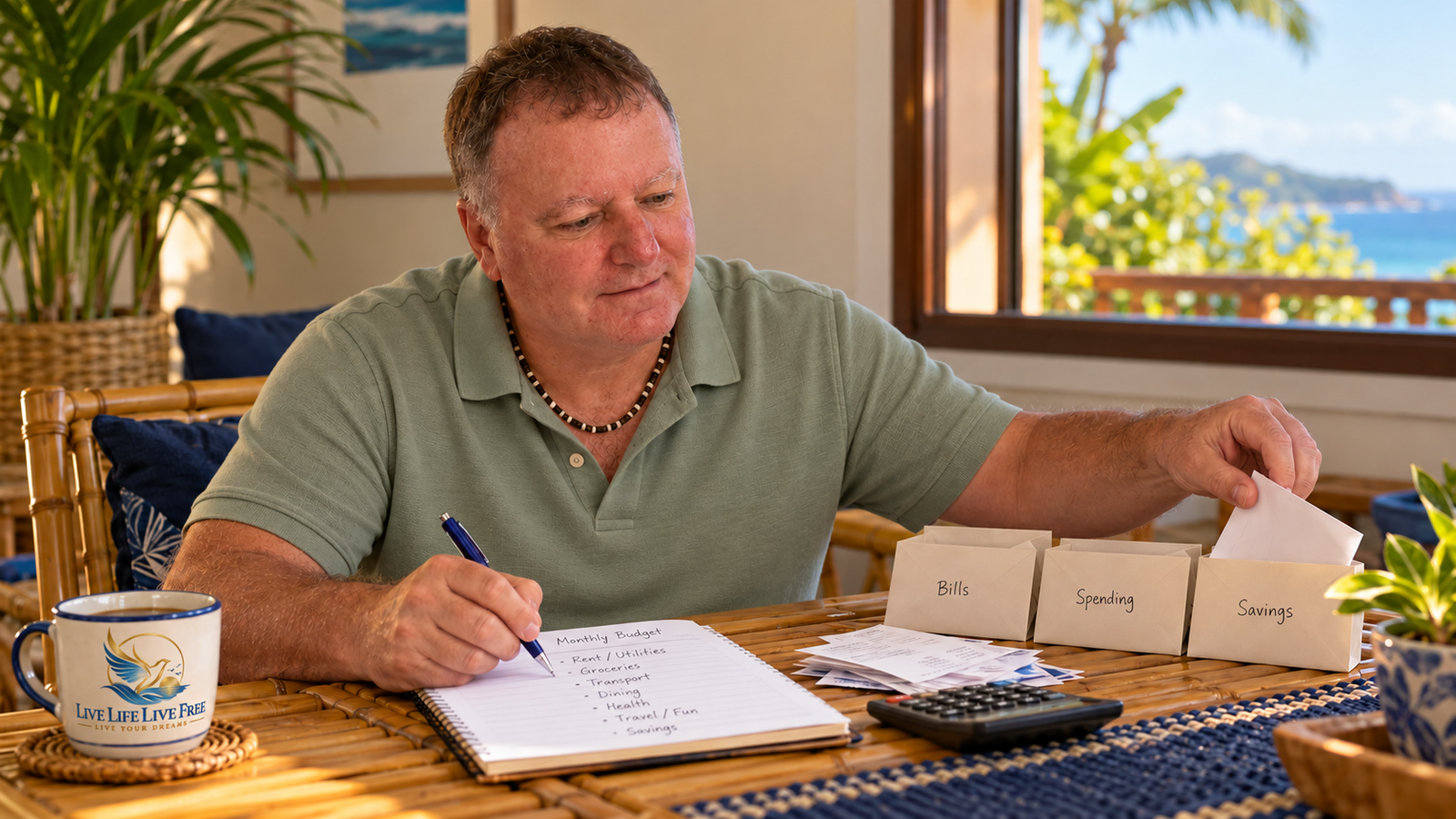
You may be able to do the same thing with savings pots or an envelope system. Check fees, minimum balances, and transfer times before opening several accounts. The arrangement should save you trouble, not create charges.
The spending account had to mean what it said
I could see one problem with the system straight away. What if I was out, wanted something, and didn’t have enough in the spending account? I could simply select another account on my bank card and use that money instead.
The system only helped if I stopped doing that. Money for the bills had a job already. An optional purchase could wait.
I also had to keep essential and emergency money accessible. Making savings harder to spend on impulse shouldn’t leave you unable to pay a bill or deal with a genuine problem.
I started saving for purchases instead of recovering from them
Putting money aside for something felt different from buying it on credit and worrying about it later. I could see the savings building. By the time I had enough, I sometimes didn’t want the item as much as I thought I did.
I still wanted to enjoy myself. There was room for a meal out or a coffee. I just needed those choices to fit the money I actually had available.
If impulse purchases are your problem, try leaving an item on a list overnight, removing saved card details, or switching off sales notifications. Give yourself a chance to decide after the excitement has settled.
Start with what your spending record tells you
Track a few weeks and look for the pattern. Convenience when you’re tired? Shopping when you’re bored? Subscriptions you’ve forgotten about?
Sometimes the problem is that essential costs exceed income. Giving up a coffee won’t fix that. Local assistance or debt advice may be more useful than a stricter spending rule. And if spending feels outside your control, it’s worth asking for support.
The CFPB’s money-management toolkit has spending trackers and budget worksheets you can adapt to your circumstances.
This may sound straightforward, but for me, it was life-changing. I started putting money aside for larger purchases instead of reaching for the credit card. I also learned to say no to things I wanted but didn’t need.
If I entered the spending Olympics today, I would probably finish in last place. That is one competition I wouldn’t mind losing.